Flawless MBL and HBL Matching: Solutions for the Groupage Back Office
Title: Flawless MBL and HBL document matching: Solutions for the groupage back office Primary keyword: house bill of lading consolidation
Causes of data discrepancies between MBL and HBL in groupage
Discrepancies between the Master Bill of Lading (MBL) and the House Bill of Lading (HBL) create immediate operational bottlenecks during the groupage and consolidation process. Errors occur specifically when the physical shipper’s data (listed on the HBL) doesn’t perfectly match the data the shipping line records for the overarching container (listed on the MBL). Specialized back-office outsourcing for logistics helps prevent these errors by closely monitoring asynchronous communication from origin agents.
According to the guide MBL vs HBL: Key Shipping Differences Unveiled, these communication gaps frequently lead to conflicting HS codes. An origin agent books the goods under a general HS code with the carrier, while the individual exporter makes a more specific declaration on the HBL. As soon as customs authorities cross-check the manifests, this deviation triggers an inspection.
Inconsistent Incoterms and varying consignee details also cause severe administrative friction. For groupage shipments, the destination agent (co-loader) is listed as the consignee on the MBL, while the HBL displays the actual final receiver. When a forwarder mistakenly lists the final receiver on the MBL, automated customs systems will flatly block the release of individual partial loads. This significantly increases the administrative burden on consolidation, as every single file requires manual correction.
Different weighing moments and agent communication
Volume and weight mismatches between the carrier and the co-loader stem from different measurement points along the supply chain. The carrier measures and invoices based on the full container’s gross weight (including tare). Meanwhile, the co-loader (or freight forwarder) calculates freight charges for their client based on chargeable weight, expressed in cubic meters (CBM) or kilos per individual pallet or carton.
When agents at the port of departure draft the MBL using preliminary packing lists, and only receive the actual HBL weights later, a documentation discrepancy emerges. The Detention, Demurrage and Per Diem Charges (MSC tariff document) underscores that customs authorities and terminal operators view these weight differences as a major risk factor.
Checklist: The 5 critical matching fields
To avoid customs issues and terminal holds, the groupage process requires rigorous validation. The following five fields must match perfectly between the overarching MBL and the aggregate of the underlying HBLs:
- Shipper/Consignee: The relationship between the agents on the MBL and the actual buyers/sellers on the HBL.
- Port of Loading/Discharge: The agreed-upon ports, including any specific terminal designations.
- Marks & Numbers: The identification marks of the goods and the container numbers.
- Weight/Volume: The logical sum of the weight or CBM from all HBLs compared to the gross weight on the MBL.
- Piece count: The exact number of colli or packages (the sum of the HBLs must equal the total on the MBL).
The financial impact of validation errors on deconsolidation
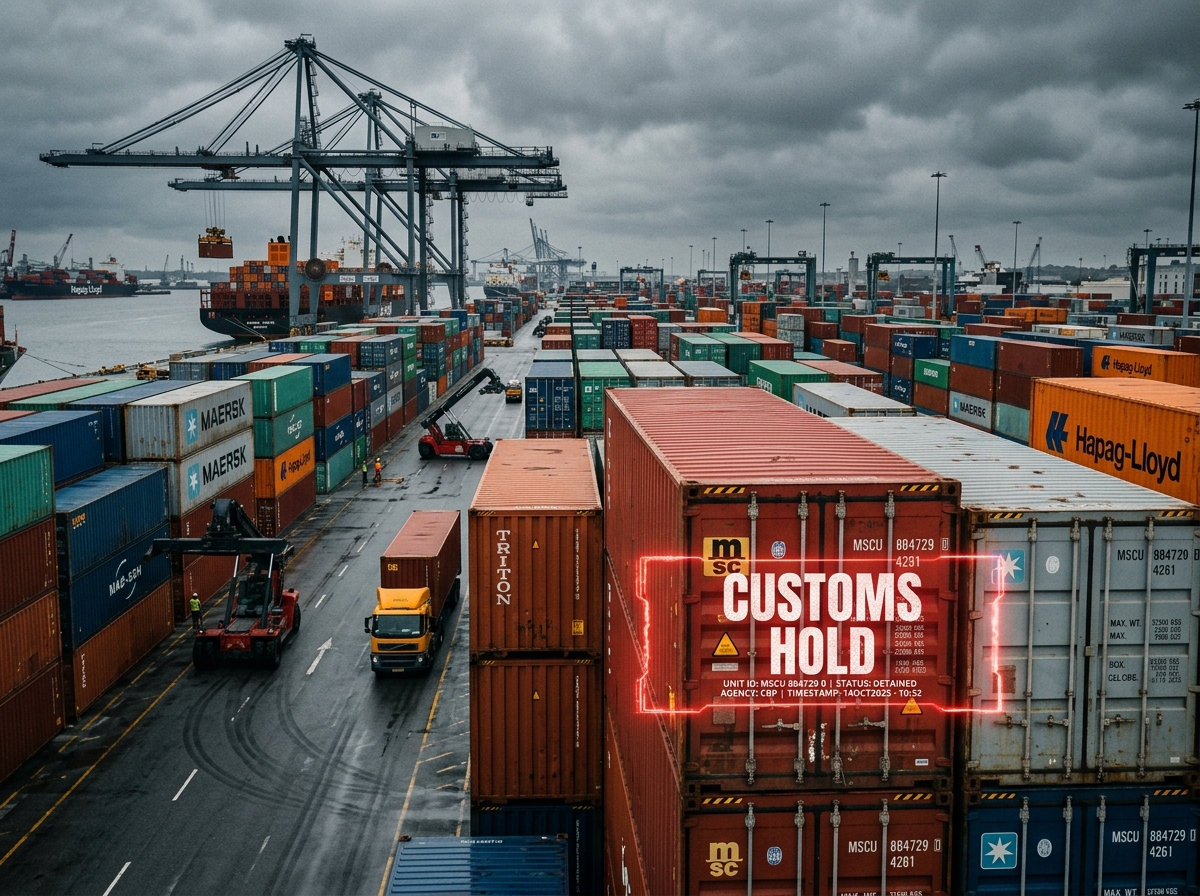
A single data deviation can block the entire deconsolidation process, causing direct financial harm to operations. Terminal systems are almost exclusively automated. The moment the submitted manifest (based on the HBLs) deviates from the carrier’s booking (the MBL), the system flatly refuses to release the container.
This blockage triggers a chain reaction of costs. The container gets held for a physical inspection to verify the manifest issues. According to the publication How to Avoid Demurrage and Detention Fees: A 2026 Playbook for … by Unicargo, the subsequent demurrage and detention fees range from $75 to $300 per day, per container. In addition to terminal costs, logistics service providers risk administrative customs fines for submitting incorrect cargo declarations, instantly wiping out the profit margin on a groupage shipment.
Immediate holds and escalating demurrage fees
Local terminal holds mark the beginning of the demurrage and detention (D&D) timeline. According to frameworks outlined in Demurrage/Carrier Detention Billing Disputes and the Detention, Demurrage and Per Diem Charges (MSC tariff document), documentation disputes frequently outlast the port’s ‘free time’ window. While the back office scrambles to find the root cause of the weight discrepancy or incorrect HS code, the boxes remain physically stuck at the terminal. Once the free days expire, daily demurrage billing kicks in. In consolidated shipments, a single flawed HBL delays every other shipment in the same container, leading to a cascade of complaints from multiple end-customers.
Manifest amendments and hidden administrative costs
The back office must correct manifest errors through a formal amendment—a process that drains hours of capacity. Fixing this data requires back-and-forth communication with the origin agent, submitting a correction request to the carrier, and providing fresh documentation to local customs authorities.
Processing these corrections creates substantial hidden costs. The publication Bill of Lading Automation: Shipping Documents OCR [2025] by Klearstack highlights how manual document processing and resolving these specific disputes place a heavy toll on staff capacity. By processing logistics documentation faster through automation, freight forwarders can significantly alleviate this administrative load.
Method 1: Data validation via RPA and OCR technology
An automated validation layer for line items is the first line of defense against manifest errors. Software solutions identify mismatches well before the container reaches the port of discharge. Optical Character Recognition (OCR) and Robotic Process Automation (RPA) play the lead roles here.
OCR technology scans incoming origin PDFs and extracts the written text into structured data. RPA then takes these fields (such as piece count, seal number, and weight) and systematically cross-references them against the master document in the Freight Management System (FMS). If the match is perfect, the system processes the file autonomously. As soon as RPA detects a discrepancy, the software generates an alert. The technology prioritizes these exceptions in a queue for the back office. According to the Bill of Lading Automation Guide by Klearstack, this approach instantly reduces the time spent searching and reviewing each file.
Data extraction from PDF origin documents
The mechanics of OCR begin the moment the document stream arrives. Origin agents frequently submit their paperwork as flat, unstructured PDFs, scans, or even image files. OCR algorithms read these files pixel by pixel. The software looks for specific anchor points in the document—such as “Gross Weight” or “B/L No:”—and captures the value sitting right next to or below it. Sources like Demurrage and Detention Pre 5/28/2024 | ONE United States emphasize the necessity of highly accurate source data to prevent billing disputes; OCR provides the essential digitization step required to make that source data comparable.
Steps in the data validation process for consolidated shipments
Setting up data validation follows a strict sequence, from document receipt right through to exception output.
- Document receipt and classification: The system receives emails from origin agents and intelligently classifies attachments as an HBL, MBL, packing list, or commercial invoice.
- Data extraction (OCR): Text recognition identifies and extracts the required values from the classified documents.
- Cross-referencing (RPA): The robot checks the extracted HBL data against the MBL data in the system, focusing specifically on the five critical matching fields.
- Calculation check: The system aggregates the weights, CBMs, and package counts from all individual HBLs and verifies whether this total logically aligns with the overarching MBL.
- Exception output and prioritization: The system flags files with discrepancies and routes them to a priority queue for further review.
Method 2: The functional limits of technology and deploying data specialists
Automation has distinct functional limits at the operational level. Matching an MBL with HBLs requires far more than just calculating numbers, especially when shipments deviate from standard processes. This technological baseline underscores the absolute necessity of hybrid back-office support, where human expertise takes over exactly where the robot stops.
Automation’s blind spots surface during complex damage cases, missing pages, or intricate customs instructions typed as free text in the margins. Highly fragmented documentation from specific Asian or South American ports is notoriously problematic; when layout formats change weekly, static RPA templates fail.
This is where specially trained data specialists prove their immense value. They manually assess exceptions, execute corrections, and communicate with the origin agent to retrieve missing information. Documents like Demurrage/Carrier Detention Billing Disputes underscore the importance of the burden of proof during carrier disputes. Human processing ensures the creation of tight, GDPR-compliant audit trails. This hybrid workflow guarantees that complex data entry remains highly accurate, freeing up local planners at the port to focus on physical handling.
Where software fails: unstandardized origins
The hard limit of RPA becomes obvious when dealing with manual and non-standardized co-loader origin formats. While deep-sea carriers invest heavily in EDI (Electronic Data Interchange) connections, local overseas agents often still rely on outdated systems, Excel printouts, or handwritten additions. RPA searches for a field at very specific coordinates. If a minor scanning skew shifts an HBL layout by just one centimeter, or if an agent appends a second page with additional commodity codes, the software produces unusable data. In these scenarios, relying 100% on technology generates a chaotic flood of error messages—as the context in Demurrage and Detention Pre 5/28/2024 | ONE United States similarly illustrates regarding inaccurately submitted evidence.
A hybrid model with remote back-office teams
A hybrid processing model bridges the speed of automated data extraction with human quality control (exceptions management). Ideally, this work should be assigned to remote back-office teams operating within the same EU time zone. This setup guarantees that documents are fully processed well before the vessel approaches the port of discharge, keeping local planners free from administrative puzzles. The exceptions are reviewed by data analysts who natively understand logistics terminology and can effectively resolve the factual mismatches between the MBL and HBL.
As a leading European service provider in back-office outsourcing and data management, DataMondial provides the exact structural foundation for this hybrid model. With a specialization in back-office outsourcing for logistics and the processing of complex documentation flows, the company acts as a strategic extension of your operations. From its nearshoring facility in Romania, a highly educated remote team operates strictly in line with European privacy legislation. The power of RPA and AI is seamlessly integrated via BPO (Business Process Outsourcing), coupled with rigorous human validation. Resolving data discrepancies, slashing demurrage risks, and guaranteeing exceptionally high data accuracy form the core of our services. Discover how process outsourcing delivers true scalability for your logistics back office and contact DataMondial for a comprehensive process analysis.