The Back-Office Silent Killer: Manual Entry of Complex ERP Data
Title: The Back-Office Silent Killer: Manual Entry of Complex ERP Data
Primary keyword: manual ERP data entry
Introduction
Your back office finalizes product specifications, contracts, and freight documents every day. Behind this illusion of control lurks a harsh business risk: the processing speed of manual data entry dictates the pace of your entire supply chain. Physical typing is the first major bottleneck in inbound goods flows, making professional [Data Processing – DataMondial](/en/diensten/dataverwerking) essential for operational continuity.
The four hidden costs of manual ERP data entry:
- Delayed turnaround times due to fragmented information processing.
- Inaccurate invoicing stemming from typos in source data.
- High hourly rates spent correcting file errors after the fact.
- Inefficient use of supply chain specialists for mundane administrative tasks.
The hidden time drain in logistics systems
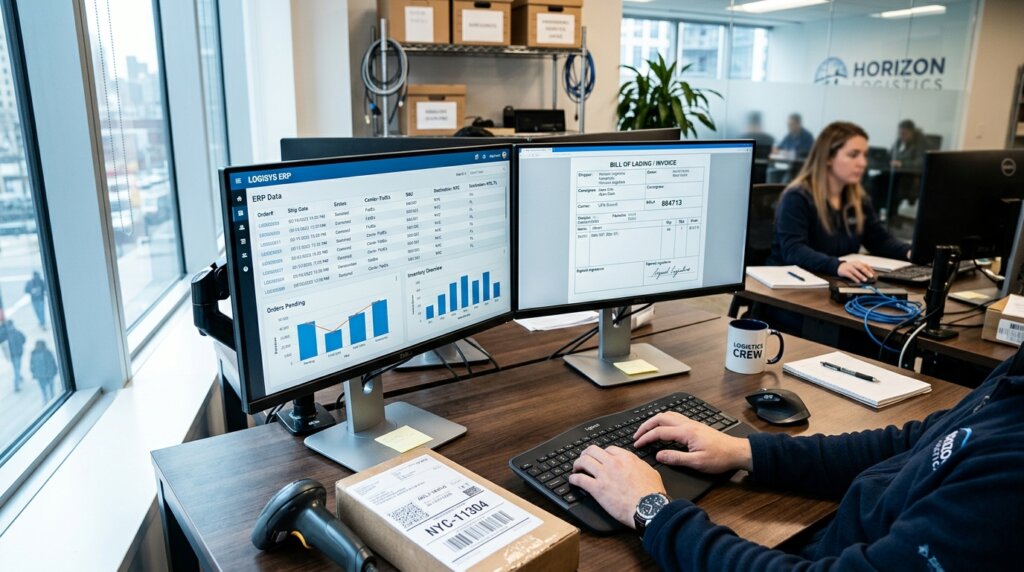
A three-minute processing time per waybill creates a false sense of control. For freight forwarders handling over 10,000 monthly transactions, this instantly creates a permanent workload of more than three full-time equivalents (FTEs). Every day, experienced staff copy and paste fragmented information from email attachments, Excel files, or scanned PDFs directly into the ERP, WMS, or TMS.
Research by the Manufacturing Leadership Council, cited in an analysis on The Best Data Entry Software in 2026 | Parseur, solidifies this hidden loss. Employees routinely lose hours to repetitive administrative tasks that add zero logistical value. When a standardized data structure is missing, this time expenditure skyrockets. A metric from the software industry reveals that the average manual processing of an incoming supplier invoice can take up to 66 minutes, as cited in the overview How to Automatically Process ERP Invoices with AI and OCR?.
Identification of the five most time-consuming data fields in your current WMS or ERP:
- HS codes and specific commodity classifications
- Deviating gross weights and parcel dimensions
- Complex batch and lot numbers for tracking
- Customer-specific delivery and invoicing terms
- Fluctuating customs tariff numbers
From exception management to pure execution
Supply chain planners and customs declarants possess the expertise to orchestrate complex goods flows and negotiate tariffs. Their roles are structurally downgraded when their workday revolves around manually retyping container records. Forcing a substantive specialist to act as a data entry clerk stifles organizational agility. Strategic supplier contact and proactive relationship management take a backseat to the pressure of simply clearing system queues.
The cascade effect of typos
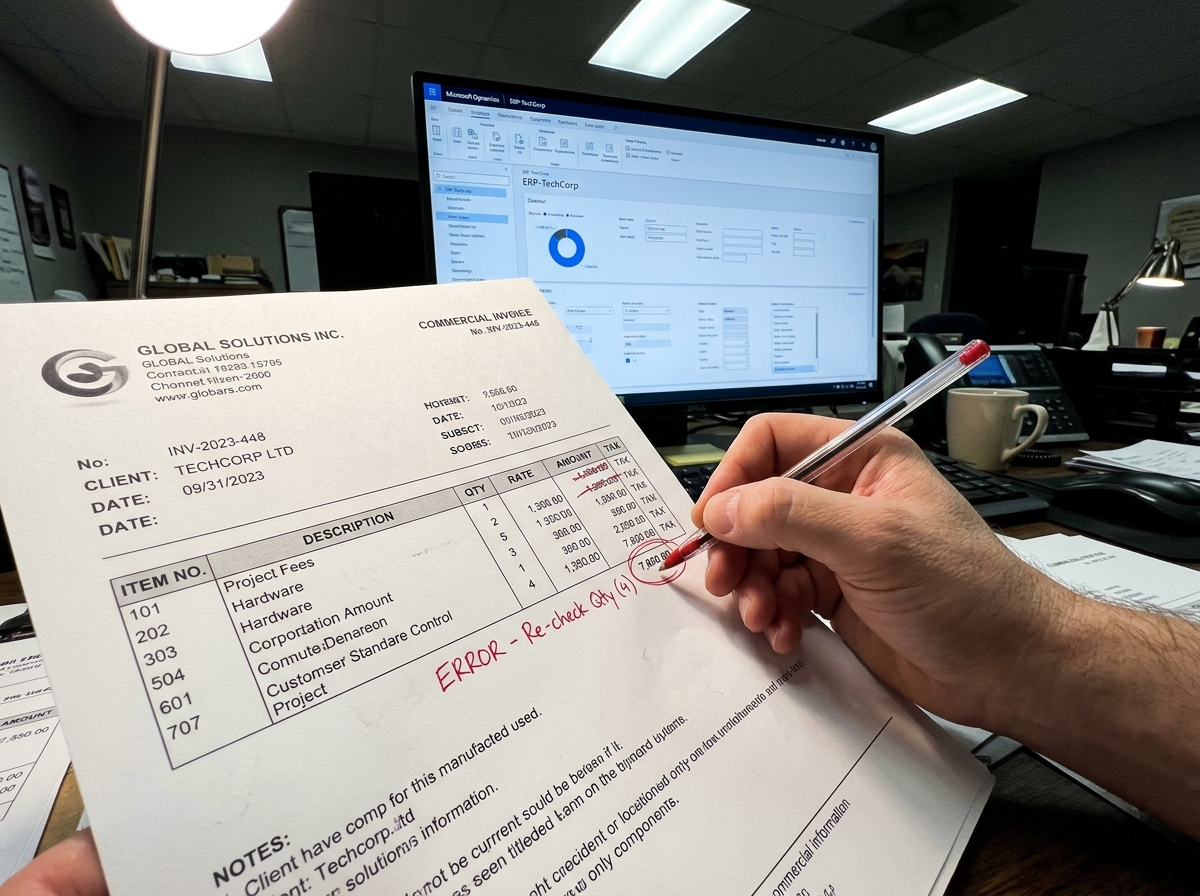
A routine keyboard slip causes a chain reaction throughout your logistical foundation. An incorrectly entered HS code disrupts identification at the border crossing. The shipment is immediately stalled at customs, physically translating into demurrage and detention costs at the terminal within 48 hours. Incorrectly registered gross weights or missed customer-specific ADR restrictions force back-office teams into a time-consuming correction cycle via cumbersome credit notes.
Locating and rectifying these defects after the fact costs, on average, five times the original entry time. A lack of built-in validation during manual typing masks these risks; missing or incorrect fields are often only noticed in the final phase of a transport. Financial impact of a simple typo
A lack of data accuracy directly hits your cash flows. Consider this calculation: three manual errors in the invoice lines of a monthly consolidated invoice totaling €50,000 instantly trigger a payment block in the client’s approval system. The bounce back, identification of the incorrect rate, crediting, and final resubmission can easily span fourteen working days. The full thirty-day payment term then restarts entirely. This delay drastically stretches your Days Sales Outstanding (DSO) and unnecessarily freezes your operational working capital.
Scalability issues during peak volumes
Seasonal freight volumes or unexpected market fluctuations test the limits of local departments. Your core internal team quickly hits the ceiling of human processing capacity. Hiring local staff to clear an administrative backlog requires a heavy capital injection with a high-risk profile. Scaling organically clashes hard with current margin pressures. The persistent labor market shortage makes recruitment in Western Europe expensive and slow—a bottleneck widely highlighted in the case studies on Three Ways to Integrate Artificial Intelligence into Your ERP.
Manual validation still has its place, but exclusively for exceptions. This includes interpreting specific legislation for unstructured logistics documents regarding ‘dual-use’ goods. Such interpretations require up-to-date compliance knowledge. For all standard, structured data streams, you must rely on [Streamlining Master Data in ERP Systems: Solutions for Complex Data Processing](/en/) and Robotic Process Automation (RPA), ensuring that human intelligence is focused on genuine edge cases.
Human dependency as a limit to growth
Scaling routinely via permanent local contracts forces service providers into high, rigid overheads. A new data-entry employee needs months of training to flawlessly comprehend ocean freight documentation. This focus on recruitment disrupts your operational roadmap and directly depresses the net profit per handled shipment. Scalability demands the tactical deconstruction of processes rather than blindly throwing more people at an inefficient documentation model.
Break free from the administrative stranglehold
The throughput speed and profitability of your entire logistics operation rely on the accuracy of the initial data registration. Is your organization’s growth stagnating due to repetitive typing in the ERP?
Unburden your core team with the services of DataMondial. With a strategic Business Process Outsourcing (BPO) model via our renowned nearshoring facility in Romania, you shift labor-intensive routines to a scalable environment for [Data Processing – DataMondial](/en/diensten/dataverwerking). Deploying highly educated, local specialists combined with RPA and automation software gives you strict control over data quality. Benefit from absolute EU compliance and the direction of an experienced Dutch headquarters. [Streamlining Master Data in ERP Systems: Solutions for Complex Data Processing](/en/) is the logical next step for organizations looking to grow. Contact DataMondial and instantly free up capacity for innovation and targeted customer service.