Template Decay in the Supply Chain: Why Minor Layout Changes Derail Automation
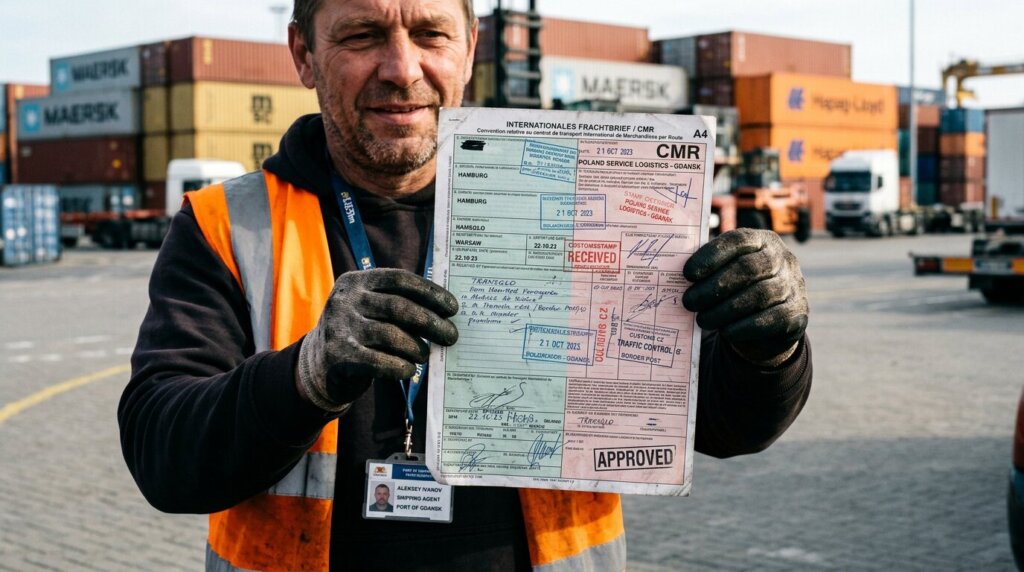
The Anatomy of Template Decay in Waybills and Customs Documents
Digital document flows within the supply chain grind to an immediate halt when the physical layout of a source document changes even marginally. Standard Optical Character Recognition (OCR) relies fundamentally on hard-coded rules and exact visual coordinates. A system expects the gross weight to sit perfectly in a specific bottom-right field, and the customs number to fit within a rigidly defined box on the top left. To prevent this kind of stagnation, top-tier data validation for OCR, AI, and Machine Learning is essential for continuous workflows.
The reality of modern logistics is highly dynamic. Transport partners constantly update their systems, document generators roll out software updates, and companies regularly rebrand. An unannounced decision by a sender to add a new logo to an invoice pushes the entire page structure down by just three millimeters. This seemingly harmless visual tweak instantly renders the data unreadable for rules-based recognition software.
According to the publication OCR for Transport and Logistics – EasyData, this shift directly results in unrecognized fields on CMRs and waybills. Disoriented, the software encounters blank space instead of text, or the predefined reading frames suddenly overlap with a table border. The automated process crashes. The document drops out of the standard workflow, landing straight in the exception pile for manual review.
How a Shifted Logo Disrupts the Validation Process
Rules-based mapping acts like a rigid stencil placed over a document. The moment the underlying text shifts, the system reads the wrong data. The validation process, strictly governed by X and Y coordinates, is easily confused due to the software’s inherent rigidity.
The manual OCR for CMR Documents and Waybills – Virtualworkforce.ai specifies that systems attempt to validate field types based on strict expectations. If the system expects a numeric postal code but, due to a shifted layout, extracts part of a company name instead, validation fails immediately. A new logo at the top of a document alters the vertical starting point of all subsequent tables. The system “looks” at the old coordinates, finds an unexpected data type, and rejects the read. This violently halts the flow of documents, demanding immediate human intervention to correct the misallocated fields. As a result, companies are increasingly looking for solutions to document recognition fallout to minimize processing delays.
Why Traditional Logistics OCR Template Management Reaches Its Limits
Operating with hard-coded templates theoretically delivers measurable efficiency gains—provided the document flow is entirely uniform. In practice, managing supplier-specific templates quickly degenerates into a time-consuming maintenance nightmare. It creates a vicious cycle where operational teams are constantly playing catch-up with incoming document flows.
For your top 10 long-term transport partners, who supply consistent waybills and invoices, template mapping usually works well. The initial investment in configuring the rules is justified by the sheer volume. Friction occurs when market conditions fluctuate, introducing ad-hoc charters, varying freight forwarders, and spot-market carriers. Every new format demands a brand-new template.
Before long, the back office spends more time aligning, testing, and refining templates alongside IT departments or external consultants than executing their primary task: data rotation and validation.
Below is a breakdown of how hours are spent in a traditionally managed OCR environment handling manual process exceptions:
| Process Step | Time Commitment | Employee Focus | Direct Impact on Throughput |
|---|---|---|---|
| Building & testing new templates (IT/Backoffice) | Weeks of lead time, hours of active effort | Technical configuration and testing of coordinates | None; document sits idle until corrected |
| Processing ad-hoc document variations | Continuous | Identifying and classifying exceptions | Stagnation of specific shipments |
| Manual data correction per exception | 5 to 15 minutes per document | Retyping data from a second monitor | Short-term fix; process fails upon next layout change |
Literature such as OCR Invoice Processing – Rillion demonstrates that relying on rules-based recognition places a hard ceiling on flexibility. The administrative burden doesn’t disappear; it merely shifts from manual data entry to IT maintenance.
The Scalability Barrier of Supplier-Specific Rules
Onboarding large numbers of fluctuating freight forwarders makes manual template management unsustainable. A mid-sized logistics player can easily work with 50 regular forwarders, which collectively account for hundreds of document variants. Add five new spot-market carriers every week, and the number of required templates spirals mathematically out of control.
The theory detailed in What is Transformer-Based OCR? – LlamaIndex clearly illustrates that traditional systems inevitably choke on this scalability hurdle. Each template requires ongoing maintenance and version control. When document variation multiplies, processing speeds stall. Finding themselves starved of IT resources, the fallback task of manual exception handling ricochets straight back to the planning and back-office desks.
The Hidden Costs of Manual Exception Handling
Document rejection hits operational integrity far harder than just the licensing fees of OCR software. It strikes at the very core of your business: your people. Every waybill, customs declaration, or purchase invoice rejected by the software demands manual human interpretation.
Highly educated, scarce back-office staff are forced to spend hours mindlessly retyping data. In the logistics sector, where margins are notoriously tight and time pressure is immense, this is an incredibly inefficient use of human capital. A customs declaration waiting in a queue essentially blocks physical containers at the terminal, triggering demurrage fees and bottlenecking hinterland transport.
The article Automated Document Processing is Challenging for Logistics Firms – Why Conversational Exception Handling Is the Answer identifies this backlog resolution as a stagnant pool within logistics pipelines. Industry reports like Scan & Recognize (OCR) for Logistics Documents – Doxis / Klippa confirm that manual intervention inevitably increases error rates. Pushed by looming deadlines, keystrokes are hurried, directly resulting in faulty customs clearances or agonizing invoicing discrepancies.
The Degradation of Back-Office Capacity Through Ad-Hoc Corrections
Back-office specialists are hired for value-adding work: route planning, escalation solving, and strategic account management. Due to document fallout, their role degrades into reactive retyping.
Instead of optimizing network efficiency, these employees spend their days squinting at rejected scans inside an ERP or WMS interface. Experiencing this shift inevitably drives up operational costs. The process hinders employee growth, tanks job satisfaction, and throttles an organization’s ability to take on new assignments—simply because administrative bandwidth is completely saturated.
When Machine Learning and AI Cannot Solve Data Fallout
Modern software vendors frequently position Artificial Intelligence and Machine Learning as the silver bullets for template decay. The prevailing assumption is that self-learning models can perfectly parse any random document snippet. However, the harsh reality of logistics data processing exposes severe limitations when relying solely on technological solutions.
In Recommendations for AI-Based Handwritten Text, Signature and Stamp Extraction, Microsoft explicitly warns against the physical limits of AI models. Physical documents are rife with unpredictable variables. A warehouse worker scrawls a handwritten note right over a barcode. Customs officials stamp heavy, wet ink directly over the invoice total. These elements create blind spots that cause any algorithm, no matter how advanced, to crash into vast margins of uncertainty.
The processing pipeline holds a strict confidence threshold for these types of documents. The moment the AI score slips below this line, human intervention becomes mandatory. Without an embedded, scalable human safety net, documents riddled with these anomalies are mercilessly stranded in your systems.
The Limits of Pattern Recognition on a Busy Loading Dock
The environment on a fast-paced loading dock is rugged. Documents physically travel alongside freight in fully loaded truck cabins. A truck driver folds a CMR into his breast pocket, carving sharp creases straight through essential data tables. Rainwater smudges a barcode during transshipment, while hastily scribbled signatures obscure data-sensitive fields.
When a dockyard scanner digitizes this document, pattern recognition struggles against the visual noise. The model misinterprets a crumpled fold as a dividing line in a table. A ballpoint pen annotation distorts printed letters, causing the algorithm to lose track of the data structure. As OCR for CMR Documents and Waybills – Virtualworkforce.ai illustrates, these grim physical realities render the data totally uninterpretable to AI.
The Importance of a Human Exception-Handling Layer
Because automation cannot clear this final hurdle when dealing with severely damaged or altered documents, the data processing flow demands dedicated exception-handling operations conducted by skilled personnel. The implementation of Robotic Process Automation (RPA) entirely loses its value if the underlying data entry fails.
By consciously outsourcing this margin of error through Business Process Outsourcing (BPO) or EU-compliant nearshoring, you unblock the true processing pipeline. Instead of crippling your internal resources, a trained, external exception-handling layer steps in to catch the fallout. Erroneous fields, illegible stamps, and modified templates are instantly validated by dedicated operational data specialists. This validation layer single-handedly protects your internal logistics processes, guarantees strict continuity within the supply chain, and consistently secures unrivaled data accuracy.
Conclusion
Template decay clearly demonstrates the vulnerability of static document processing within an ever-evolving supply chain. Minor layout shifts and physical irregularities ultimately render both traditional coordinate-based software and advanced AI utterly incapable of fully autonomous processing. Managing these exceptions drains highly valuable capacity from local back offices and stalls primary throughput.
Is the operational pressure caused by document fallout becoming unsustainable for your team? Discover how DataMondial, operating from a state-of-the-art nearshoring facility in Romania, serves as a secure, scalable, and 100% EU-compliant exception-handling layer for your document streams. Partnering to outsource data validation for OCR, AI, and Machine Learning provides immediate, measurable results. For logistics companies desperately in need of a robust exception-handling framework to manage OCR failures, this is the definitive path forward. Contact us today to discuss how we can structurally eliminate your recurring operational backlogs.