The True Cost of Administrative Staff Shortages in Logistics
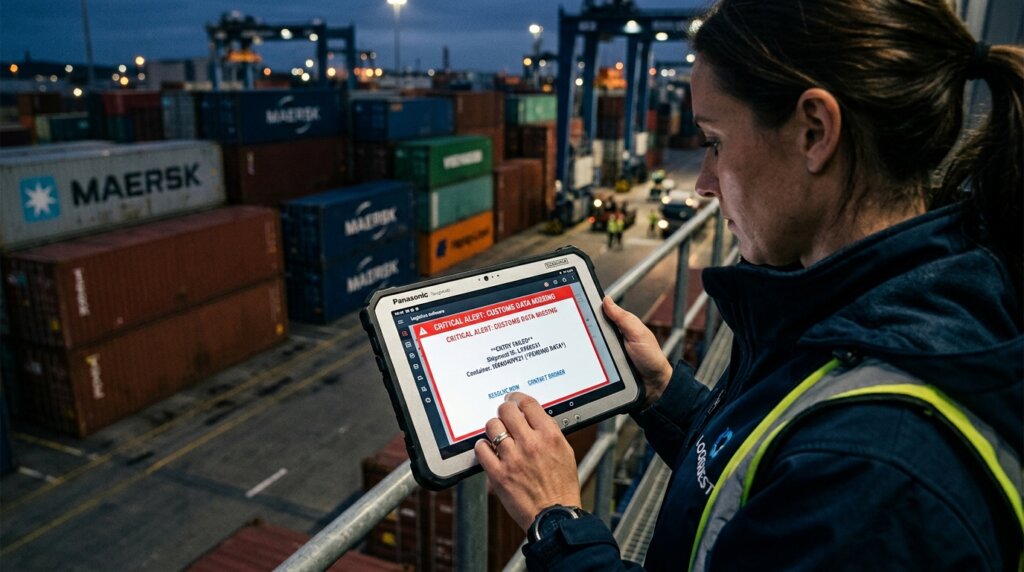
Customs delays start in the back office
Physical supply chains rarely face their first delays at a border crossing or port terminal; the real bottleneck usually starts in a conventional office where data entry vacancies remain unfilled. A lack of administrative capacity directly causes a backlog in processing customs documentation. What begins on Monday morning as a stack of unopened emails with shipping manifests can escalate within days into stalled cargo and dissatisfied customers.
The workload on back-office departments directly impacts the quality of the output. Fiscal documents require precise data capture under strict deadlines. Stagnant processing disrupts the information flow required for customs clearance. Carriers wait for cleared documents, while the customer waits for their goods. This chain reaction demands direct operational intervention, where professional back-office outsourcing offers a proven solution rather than holding out hope for a quick local hire.
The cascading operational impact of unfilled back-office roles
An operational back office functions as the engine of logistics services. When capacity falters, the physical supply chain grinds to a halt. Unprocessed waybills and Bills of Lading block subsequent transport schedules. A container might be physically unloaded on the quay, but without the corresponding digital documentation cleared, onward internal transport remains impossible.
This administrative standstill causes a measurable spike in demurrage and detention fees. Shipping lines and terminals enforce strict free-time windows; the moment these expire due to missing paperwork, daily per-container costs start accumulating. Resolving these administrative bottlenecks is essential to eliminate these entirely unnecessary operational expenses.
When senior forwarders are forced into data entry
A shortage of dedicated data entry staff leads to a heavily skewed distribution of tasks. Senior freight forwarders and logistics planners end up absorbing document flows just to clear acute backlogs. This creates a severe mismatch in resource allocation. The hours a senior specialist spends retyping a cargo manifest take away directly from strategic supply chain management, rate negotiations, and relationship management with shipping lines. Operational momentum weakens because the department’s primary problem-solving capacity is wasted on purely repetitive tasks.
Checklist: 4 warning signs of an overloaded administration
An overwhelmed back office exhibits specific, measurable indicators before the situation ever escalates to the customer level.
Structurally delayed clearances: Documents consistently reach customs declarants after regular cut-off times, leading to deferred cargo releases.
Spike in expedited shipments: Goods have to be forwarded via emergency couriers because standard carriers couldn’t load the cargo due to missing clearances.
Increase in correction documents: A rise in necessary corrections following initial data entry, indicating systemic rush jobs and reduced quality control.
Chronic overtime shifts: The standard team can no longer process the baseline workload during regular office hours, making evening and weekend shifts the new norm.
The hidden costs of a structural data entry backlog
Understaffing in the administrative department carries a direct, identifiable financial toll. Under immense pressure, the operational focus inevitably shifts from data accuracy to pure processing speed. This pivot results in compliance damage and a sharp increase in operational expenditures (OPEX). Overtime must be paid out at premium rates, while the margin of error in the baseline work simultaneously climbs.
Compliance risks and the financial fallout of typos
Rushed data entry leads to mistakes that carry immediate fiscal consequences. A simple typo in a Harmonized System (HS) code results in incorrect tariff classifications at customs.
A quick calculation makes this risk painfully clear: Under time pressure, an employee enters an incorrect HS code. Customs flags the shipment for physical inspection, delaying the release by four days. Meanwhile, the container exceeds its free terminal days. At a demurrage rate of €150 per day per container, this single typo instantly costs €600—excluding the costs of the physical inspection itself and the administrative correction required by a customs declarant. Multiply this by multiple shipments per week, and the financial impact of understaffing quickly eclipses the cost of engineering dedicated processing capacity.
Revenue leakage through delayed invoicing
Lagging financial processing cuts directly into the cash flow of a logistics company. If the registration of purchase invoices, transport costs, and additional surcharges is delayed, sales invoicing is automatically pushed back. Files can only be closed and billed to the end customer once all costs are accurately captured in the systems. An administrative turnaround time that creeps from three days to fourteen days means working capital remains unnecessarily tied up.
Why traditional recruitment for logistics administration falls short
Relying on local recruitment via standard staffing agencies or job boards is increasingly failing as a sustainable solution for highly repetitive tasks. The labor market for administrative data entry roles faces a structural deficit. Candidates generally look for task variety and career progression, which are inherently limited in pure data entry positions. Demographic shifts compound this issue; an aging population shrinks the available workforce and puts further pressure on an already tight labor market.
Furthermore, the scramble for local talent often results in short-term contracts. When employees leave after a few months, valuable process knowledge walks out the door with them, forcing the recruitment and onboarding cycle to continuously restart. This makes local staffing highly inefficient and difficult to scale for organizations heavily reliant on recurring administrative operations.
Demographic shrinkage and the unappealing nature of repetitive roles
Macro-demographic data reveals a shrinking pool of mid-level administrative personnel. Coupled with shifting candidate expectations—where flexibility and task variety are primary career drivers—back-office data entry positions simply lose out. Working within strictly regulated systems, endlessly processing invoices or cargo manifests, no longer aligns with the expectations of today’s local job seekers.
The continuous drain of system-specific domain knowledge
Logistics software platforms like CargoWise, Descartes, or specialized TMS systems come with a notoriously steep learning curve. Training a new employee to the point of flawless, independent production takes weeks, if not months. High staff turnover destroys the ROI on this time investment. Quite often, the onboarding burden unwillingly falls on the shoulders of the few remaining permanent staff members, placing their own productivity under even greater strain.
The limits of internal symptom management and ad-hoc solutions
Logistics providers frequently try to manage workload peaks by internally shifting tasks or bringing in temporary workers via staffing agencies. These ad-hoc methods only treat the operational symptoms. The sheer complexity behind customs documentation and freight forwarding requires highly stable processing rooted in accumulated knowledge. Establishing a flawless step-by-step plan for process handover aimed at structural back-office migration and process engineering completely eliminates the need for this constant firefighting approach.
Productivity loss during internal capacity shifts
Structurally shuffling existing staff is fundamentally flawed. When a customs declarant or operational planner is forced to pivot their focus to baseline data entry, the team’s overall output drops. Specialized professionals end up working overtime on tasks well below their pay grade, which breeds demotivation and elevates the risk of burnout due to work pressure. The department’s capacity hasn’t actually increased; it has merely been deployed far more inefficiently.
Healthy flexibility vs. GDPR and data quality risks
Short-term hiring via temp agencies or flex pools is perfectly adequate for incidental absences, such as a seasonal flu wave. However, utilizing them as a long-term structural fix creates a significant risk profile. Frequent turnover in short-term personnel severely elevates risks surrounding data quality and GDPR compliance. International client data demands strictly controlled, monitored processing. Constantly onboarding and offboarding temporary staff into business-critical systems compromises data security and fragments accountability across vital processes. External process engineering via dedicated nearshore teams provides the necessary assurance and rigid control.
Break the cycle of delays
An efficient supply chain will fail without watertight, stable data production running in the background. Internal workload shifts and the fading hope for fresh local talent offer no real defense against the structural volume increases facing the logistics sector. Core processes require a strategic redesign where repetitive tasks are handled systematically and flawlessly, far removed from the ad-hoc chaos of the day-to-day operation.
DataMondial delivers this exact stability as your BPO partner, focused purely on concrete cost control and operational continuity. Operating from our proprietary nearshoring facilities in Romania, a team of highly educated professionals takes measurable ownership of your administrative back-office processes. By leveraging advanced, hybrid solutions where RPA and human expertise seamlessly integrate, DataMondial guarantees unhindered scalability alongside strict EU compliance and 99%+ data accuracy. Ready to finally offload the administrative burden and refocus your internal teams on core activities—without ever compromising data quality? Contact DataMondial today.