Algorithm Aversion in Freight Forwarding: Why Back-Office Teams Revert to Excel After AI Errors
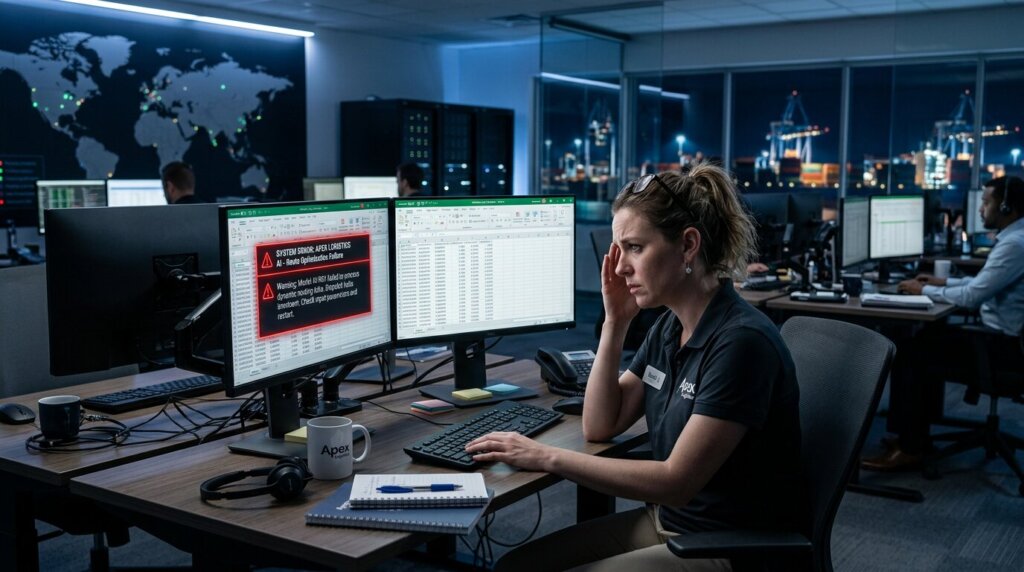
Algorithm Aversion in Freight Forwarding: Why Back-Office Teams Revert to Excel After AI Errors
The Psychology Behind Algorithm Aversion on the Operations Floor
Operational teams in logistics react fundamentally differently to software errors than to mistakes made by colleagues. When implementing automated data systems, managers systematically overestimate the shop floor’s willingness to accept machine output. As soon as a new model makes its first mistakes, adoption rates plummet.
This behavior is explained by the academic study Algorithm Aversion: People Err When They Use Algorithms (Dietvorst, Simmons, and Massey, 2015). The researchers demonstrated that humans lose trust in an algorithm much faster than in a human, even when the algorithm performs better overall. In a freight forwarding department, this results in the severe penalization of linear system errors. Proper data validation for OCR, AI, and Machine Learning is essential to maintain this trust. An employee will show empathy for a colleague who, after a long shift, makes a typo in a container number. However, an RPA bot that consistently mistakes letters for zeros due to a low scan resolution is immediately written off as useless.
Ocean Container or LTL Truck?
An experienced freight forwarder reads a Bill of Lading and instantly grasps the context of the shipment. When a new AI model reads an imported document and categorizes a forty-foot ocean container as Less-than-Truckload (LTL) road freight, the automation process abruptly halts in the minds of the back-office staff.
This fundamental categorization error immediately triggers high alert. For the forwarder, the distinction between maritime logistics and road transport is the bedrock of their profession. A system missing this primary logic introduces risk across the entire supply chain. Surprise quickly turns into suspicion. The employee bypasses the new application’s interface and copies the raw data straight into their trusted Excel environment.
Human vs. Machine Errors
This disparity in tolerance between human mistakes and system errors plays out daily in live operations. The comparison matrix below illustrates how the operations floor evaluates different types of errors in practice.
| Characteristic | Colleague’s Typo | Documentation Software Pattern Error |
|---|---|---|
| Cause | Fatigue, time pressure, or distraction. | Deviating layout, unknown variables, low-DPI scan. |
| Interpretation | Isolated carelessness, incident-driven. | Stubborn pattern, fundamental miscalculation. |
| Tolerance | High. The error is relatable and “human.” | Low. The expectation was flawless data accuracy. |
| Process Impact | Manual correction in the target system; workflow continues. | Immediate escalation; temporary suspension of AI usage. |
The Rise of Shadow IT: Excel as a Safe Haven
When the back office loses faith in an automated approval process, parallel documentation systems emerge. Workflows originally designed to reduce turnaround times suddenly cause processing delays. Employees open their own spreadsheets to verify and override the system’s output, operating entirely outside the view of management or the IT department.
In low-impact processes, such as internally routing emails to the correct inbox, algorithm aversion hardly plays a role. A misrouted email is manually forwarded without consequence. However, the dynamics shift entirely when dealing with financial accountability and legal liability. In customs clearance, import duty calculations, or invoicing, supply chain departments accept zero margin of error.
When Double-Entry Becomes the Standard
Risk mitigation forces freight forwarders to create unauthorized control mechanisms. While management operates under the illusion that data entry is happening autonomously through the new software, employees are quietly recreating the steps in the background. This “double-entry” phenomenon completely destroys the anticipated cost savings of automation.
The employee allows the system to generate the customs documentation, but just to be safe, inputs the exact same variables into their own locally saved Excel spreadsheet. Only when the software’s output perfectly matches their spreadsheet calculation is the file released. This hidden practice extends processing time per file and drives up operational costs, while management reports falsely indicate a successful AI rollout.
Recognizing the Symptoms Within Supply Chain Teams
Managers looking to address anomalies in processing costs must hunt down these hidden control systems on the operations floor. There are three hard indicators that reveal hidden shadow IT and double-entry within a department:
- Spikes in data exports: An unusually high volume of CSV or Excel files being exported daily from primary TMS or WMS systems to local hard drives.
- Unexplained time discrepancies: Processing times for standardized, “automated” files fluctuate wildly. This points to manual verification of batches where staff doubt the data quality.
- Micro-corrections in logs: Audit trails reveal that employees manually open specific fields, delete the data, and then type in the exact same value simply to physically complete their own validation.
Why 100% Autonomous Data Entry is Stalling in Freight Forwarding
The promise of a completely touchless process in logistics data processing crashes into the realities of document variation. The pursuit of total autonomy results in lower adoption rates among forwarders. OCR (Optical Character Recognition) and AI vendors consistently underestimate the sheer complexity of daily document flows in the maritime and aviation sectors.
Packing slips, commercial invoices, and waybills lack global standardization. Every shipper, agent, and carrier uses their own formats. Systems trained on thousands of specific layouts jam the moment a supplier updates their software and shifts the gross weight field half a centimeter to the left. These technical barriers sabotage continuity and force organizations to compromise on their automation goals.
Global Unpredictability: The Bill of Lading
The Bill of Lading (B/L) serves as the title of ownership, contract of carriage, and receipt for a shipment. Despite standardization efforts by FIATA and BIMCO, thousands of variations circulate globally.
Models consistently choke on unfamiliar data structures. One day, a forwarder receives a natively generated PDF via EDI, and the next, a crooked, heavily stamped scan emailed by a partner office in Asia. So-called “intelligent document processing” solutions stumble over stamps overlapping text or handwritten notes regarding temperature instructions. The constant shifting of file formats and document structures demands a level of cognitive flexibility that purely autonomous bots currently lack, resulting in queues full of unprocessable exceptions.
The Classification Dilemma
Assigning the correct HS tariff codes or hazardous material classes requires deep product knowledge and up-to-date regulatory expertise. Edge cases in customs forms require specialized interpretation that depends on the final destination, intended use, and product composition.
An automated model scans the description “metal pipe” and assigns a default classification. An experienced customs declarant looks deeper into purchase invoices, material certificates, and the end-user. A metal pipe destined for a bicycle frame falls under a different customs tariff than one bound for the oil and gas industry. Because AI fails to build sufficient contextual bridges between disconnected documents within a complex file, the back office simply refuses to blindly trust software with customs compliance.
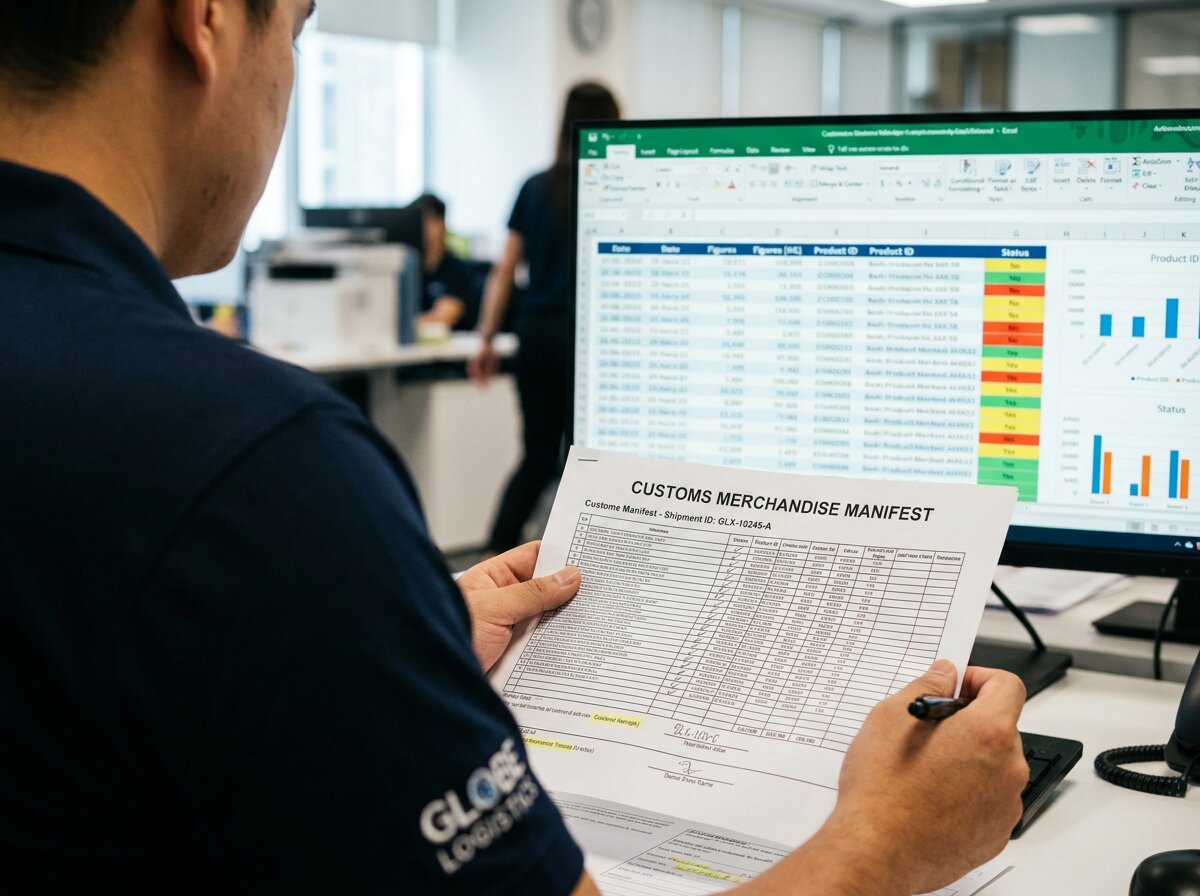
Forcing vs. Facilitating Adoption: The Human as the Control Room
You cannot break through technological resistance with a top-down, directive management style. Instead, success requires facilitation—structurally embedding human quality control into the process. The strategic alternative to stalled 100% autonomous data entry projects is a formal Human-in-the-Loop (HITL) framework.
In this setup, the human acts as the director of the output. The software extracts the data, structures the file, and prepares a draft for data entry into the FMS (Freight Management System) or ERP. The interface then presents these data points to a human controller for validation. Highly visible, active quality checks remove uncertainty from the operations floor, anchoring final accountability in a physical audit without forcing the employee to spend hours rekeying data.
Returning Control Drives Acceptance
Because employees feel empowered by explicit decision-making authority, the urge to retreat to Excel-based shadow IT fades. Layered control mechanisms rebuild trust in the organization’s own systems.
By splitting the process into extraction and human review, the barrier to accepting machine output into live production is drastically lowered. When OCR misreads an illegible stamp, it no longer escalates into corrupted master data; instead, it gets flagged on the validation screen. The forwarder reviews the suggestion, corrects the anomaly with a single click, and the workflow continues seamlessly to the next department without administrative delay.
Systematically Tackling Exceptions
Combining scalable automation with human oversight eliminates data corruption and mends the broken trust in logistics AI on the operations floor. Deploying a specialized review layer handles edge cases efficiently, freeing up expensive, senior forwarders to focus on complex client files rather than Excel audits. For logistics organizations seeking reliable BPO solutions, DataMondial streamlines this adoption by blending technology with highly experienced nearshoring teams in Romania. Do you want to break the bottleneck in logistics AI: Best practices for scalable ML data validation and create a stable workflow? Exploring options for superior data validation for OCR, AI, and Machine Learning is the key to success. Optimize your administrative processes with full EU compliance and focus on scalable, controlled data processing today.